Adding AI makes a company a bit faster. Rebuilding it around AI makes a different company.
Most owners are adding AI tools to the company they already have. That helps, a little. The bigger move is to build the same business again, from zero, around what AI can do today.
The same company, a little faster.
You buy tools and train the team. Some tasks get quicker. The company keeps its shape: same team, same costs. People report working faster, but a large study of Danish workplaces finds no change yet in paid hours or pay.
A new company, built for AI from day one.
The work is organised around what AI does well: drawings, documents, quotes, reports, admin. People keep the work only people can do. Roles are sized for that work before anyone is hired, so time saved can become cost saved. In an existing team, it tends to spread out and disappear.
It starts small, inside your company.
A small team of its own, with our systems and new rules, on one client's work. When the numbers are there, it becomes a new company built from zero and takes the work over, a few clients at a time. Your clients keep dealing with your company: the same name, the same contract, the same people. They see no change.
We grow it inside your company. It takes the work over. Then we step out.
You bring your knowledge of the market and the operating capital. We bring the systems and the AI.
We read your company.
Your numbers, your jobs, your clients. We find what an AI-native version would do differently, and what that is worth. The free estimate is the first page of this work.
We grow it inside your company.
Six months on one client's work, for a fixed price. A small team of its own: one of your seniors part-time, our systems, and new rules. You see its first work in the first weeks. At the end, we measure it against how your team works today.
It becomes its own company and takes the work.
When your numbers show the gain, the clone is set up as a new company, built from zero around AI. The work moves in waves: one client, then two, then more, with your people checking every piece. Contracts stay with your company, and your people move with the work.
You run it.
When the clone carries the work, we step out of daily operations. Management stays with you. Part of what we earn can depend on how it does.
This is not consulting. We build it with you, and we have skin in the game.
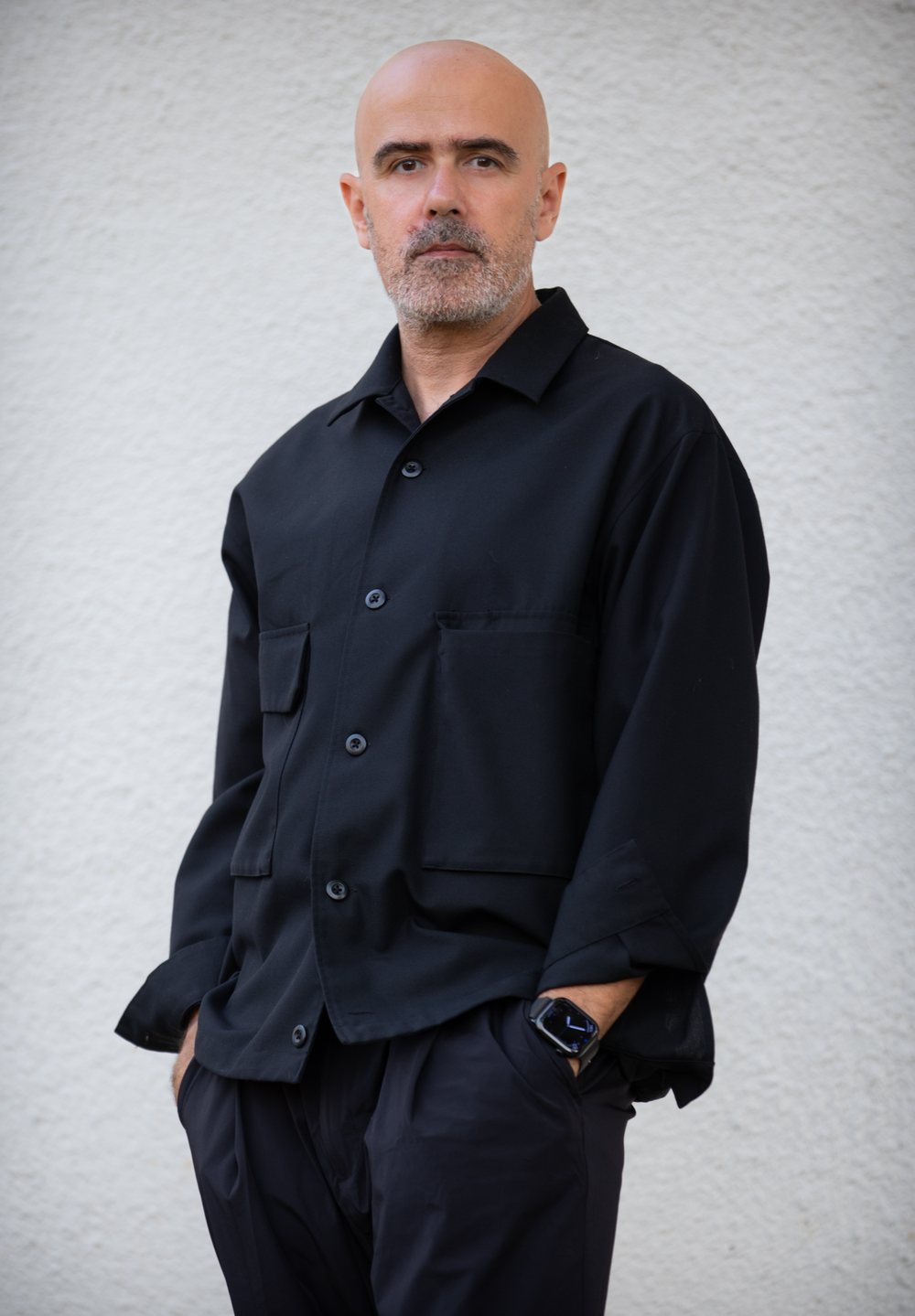
Francesco Cingolani. A habit of being early.
Architect by training, with twenty years of work across architecture, technology and cultural venues in Italy, France and Spain. He tends to start things a few years before the market does.
Third places in 2014. Computational design in 2016. AI every day since 2023. AI-native companies in 2026.
-
2014
Volumes, Paris
Co-founded Volumes, a third place with coworking, a makerspace and a food lab, and ran it with his partners. Five years later, in 2019, France launched a national programme for third places.
-
2016 to 2021
Design by Data, École des Ponts ParisTech
Co-founded and directed France's first executive master's in computational design, where architects and engineers learned to design with code, robots and 3D printing.
-
2023 to 2026
Infinito Delicias, Madrid
Directed Infinito Delicias for the Daniel and Nina Carasso Foundation: a centre for culture, food and innovation, from the building site to its opening in December 2025.
-
Since 2023
AI, every day
He has worked with AI every day since January 2023, five weeks after ChatGPT came out. Clones turns that practice into companies.
Clones is new. That is the opportunity.
We are opening Clones to a small group of first partners. Here is what coming in early gives you.
Pioneer terms
The first partners come in on better terms, in exchange for letting us publish their measured results without their name. We explain them on the call.
A say in the method
Every early clone shapes how the next ones get built. Yours will too.
Francesco on your project
In this first phase, Francesco works on every clone himself.
A 2 million euro architecture studio, rebuilt around AI.
This is an illustrative model. It is not a real client. The studio today is built on published sector studies; the clone is our projection, not a measured result. It shows how we read a company, and what your own estimate will look like.
€2.0M of revenue, 18 people. €240k of EBITDA a year, after paying both partners a market salary. EBITDA is the yearly profit before interest, tax and depreciation.
By then the two companies are one, under the studio's name. The same clients and €2.0M of revenue, 13 people. €440k of EBITDA a year. In the plan, AI drafts the drawings and documents, makes the renders, runs the first compliance checks and handles admin. People keep design, clients, permits and site visits.
Where the money goes
Yearly costs and EBITDA, in € thousands, on the same €2.0M of revenue.
| Line | Today | Clone, projected | Bars |
|---|---|---|---|
| People18 people, then 13 | 1,200 | 1,060 | |
| Subcontractors and consultantsrenders and drafting move in-house | 200 | 100 | |
| Offices | 130 | 80 | |
| Software and IT | 70 | 55 | |
| AI and systemsnew line, plus a systems lead in People | 0 | 140 | |
| Other overheads | 160 | 125 | |
| Total costs | 1,760 | 1,560 | |
| EBITDA€2.0M of revenue minus total costs | 240 | 440 |
- Pilot, systems and support during the move€126k
- New company, and insurance after the studio stops trading€40k
- Two job cuts€50k
- Less the profit both companies earn meanwhile−€192k
The first four years
Projection, € thousands. The studio and the clone together, against carrying on as today (€240k a year).
| Year | Share of work in the clone, at year end | EBITDA, both companies | Against today |
|---|---|---|---|
| 1 | 9% | 84 | −156 |
| 2 | 50% | 25 | −215 |
| 3 | 100% | 199 | −41 |
| 4 | 100% | 440 | +200 |
| Total | 748 | −212 |
Said plainly, in this projection: the move costs profit before it pays. Over four years the two companies earn €748k. Carrying on as today, the studio would earn €960k. After €236k of one-off costs, the pilot and systems included, the move leaves €512k. From year four they earn €440k a year against €240k, and the whole move has paid for itself around month 75 (month 62 to 134 across our range). Your clients see no change, because contracts stay with the studio. It rests on your team moving with the work, on the quality holding, and on the core bet below. That is why it starts with a six-month pilot on one client's work: the clone is set up only when your own numbers show the gain.
The assumptions we used
- Same market salary for the two partners in both companies, €110k each. Before partner pay, the studio makes 23%.
- A six-month pilot inside the studio on one client's work, with half a senior checking it. In this example the pilot shows the gain, so the clone company is set up in month 7 and every wave passes on schedule.
- The work for the studio's 12 clients moves in 5 waves, in months 7, 13, 19, 25 and 31. Contracts and prices stay with the studio.
- Each wave gets senior time checking the work for six months, a full senior for the first two waves and less after that: €140k in total.
- The core bet: €154k of revenue per person at full speed, against €106k to €139k in the sector studies. This is our projection, not a measured result.
- AI and systems cost €140k a year at full speed, plus a systems lead at €100k from month 7. The pilot, the systems and support during the move: €126k over 30 months. Part of it can depend on the result; the terms are for the call.
- Nobody leaves for the pilot. Leavers are not replaced (12% of staff a year, our assumption), two juniors are promoted to senior (€80k each) as the work moves, then 2 job cuts at six months of pay.
- Running two companies costs about €60k over the move (accounts, the clone's insurance), plus €50k one-off: set-up, insurance after the studio stops trading, and merging the two into one at the end. Moving to a smaller office at month 37: €10k.
- The studio's licensed architect signs off every compliance check.
Sources: ACE Sector Study 2024, RIBA Business Benchmarking 2024, AIA Firm Survey 2024, BAK Strukturbefragung 2024.
The questions owners ask first.
Why would I fund a competitor to my own business?
The clone will be built anyway. The only choice is whether you build it, or someone else builds it against you.
In practice it takes over your own work, a few clients at a time, at the pace the quality allows. Your clients keep dealing with your company and see no change. At the end the two companies become one, under your name.
What happens when you leave?
We step out of daily operations once the clone runs on its own: the systems work, the team knows them, and the numbers are there to read every month.
Day-to-day management stays with you, so nothing has to change hands when we step back. We stay invested in how the clone does.
What happens to my team?
Nobody has to leave for the pilot. After that, your people move with the work. For the same work the clone needs fewer people, so it grows mostly by not replacing people who leave. In our example two roles also end, with six months of pay.
Who checks the clone’s work?
The first projects go through the clone with your people checking every piece of work. Your company signs what needs signing, as it does today. More work moves only when the work is right.
Has anyone proved this works?
Not yet, and we will not pretend otherwise. People who use AI at work report real time savings, but a large study of Danish workplaces finds no change yet in paid hours or pay. Our numbers for the clone are a projection, and we mark them as one.
That is why it starts with a pilot on one client’s work, inside your company and for a fixed price. The clone is set up only when your own numbers show the gain.
How is this different from another AI consultant?
A consultant is paid by the day and leaves you a report. We build the company with you, and we have skin in the game: part of what we earn depends on the result.
We explain how the deal works on the call.
My accounts are not public. How good can the estimate be?
When your accounts are filed, your revenue and EBITDA today are exact, with their year and source. When they are not, we estimate them from public signals such as your team size and your sector, and we show you a reliability level and every assumption we used. The three numbers for your clone look ahead, so each one always comes with a range.
You can correct any of them on the call.
I may sell my company in a few years. Does this help?
It can. A buyer pays a multiple of profit. In our example the same revenue carries €440k of EBITDA instead of €240k, so the price would follow at whatever multiple the buyer pays.
Like every number for the clone, that is a projection until your own pilot measures it.
Which companies can be cloned?
The sector matters less than the model. We look for companies whose work can be described and repeated: architecture and engineering studios, real estate, restaurants and bars, and many others.
If your company is a poor fit, your estimate will say so.
Talk to Francesco.
Thirty minutes on Zoom. Bring your estimate, or just your questions. If there is no clone worth building in your company, he will tell you.
Prefer email? Write to immaginoteca@gmail.com